Here’s How Bruce Lee Trained in the 1960s: Inside His Complete Fitness Programme
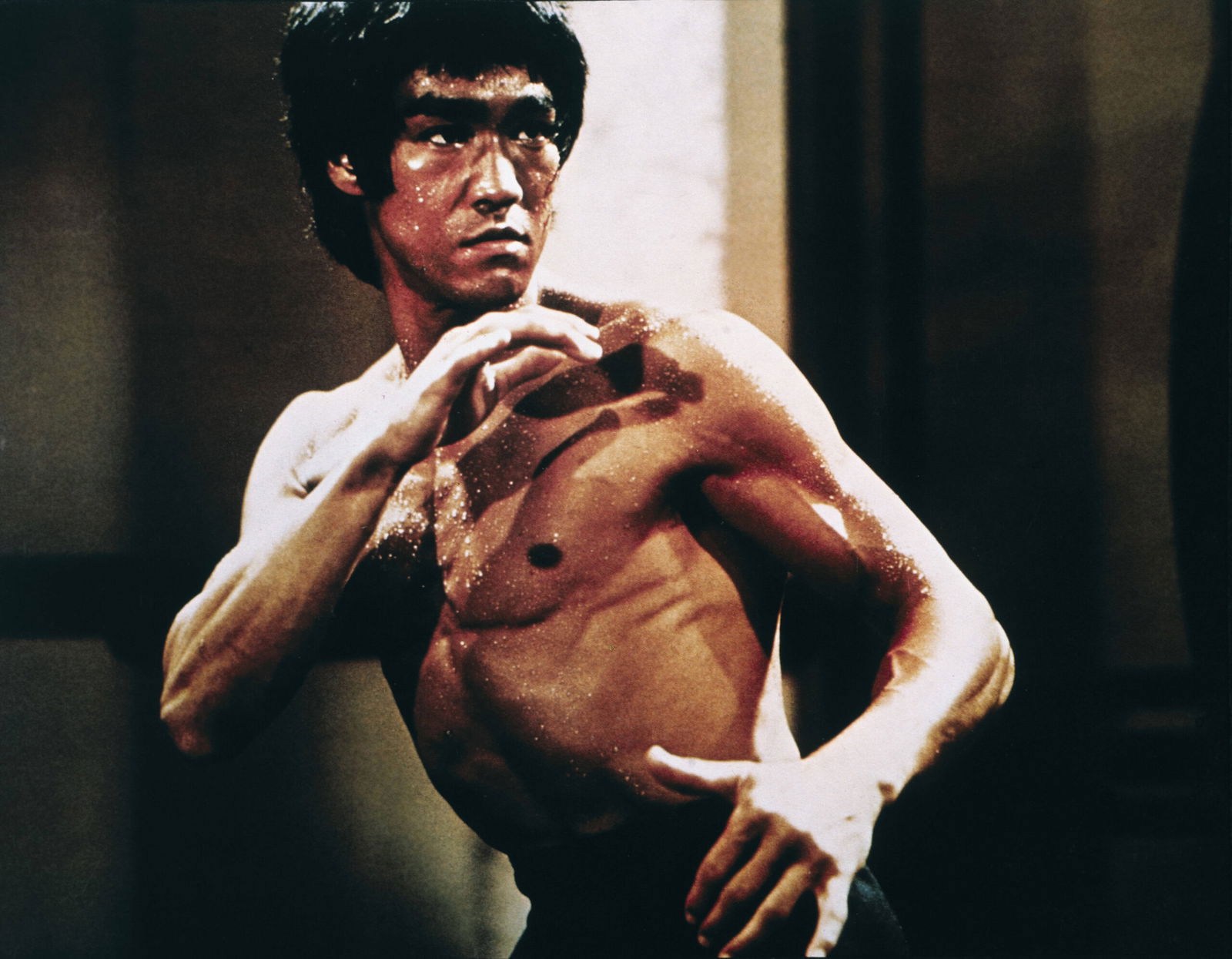
Bruce Lee focused on the principles of simplicity, directness, and efficiency, often using the idea of being like water to explain adaptability and response.
Bruce Lee’s approach also promoted taking what works, setting aside what does not, and shaping one’s practice accordingly, a way of thinking that later aligned with the development of Mixed Martial Arts.
If you are ready to adapt and follow the idea of being like water, this is for you. Here, we present an instance of the 1960s fitness programme.
Bruce Lee's fitness regimen in the 1960s
Verified records of Bruce Lee’s training exist through notes preserved by John Little, compiled in The Art of Expressing the Human Body.
These documents provide direct insight into how Lee trained, based on routines he recorded himself. One early example comes from a gym card dated 1965, linked to a Hong Kong gym Lee reportedly visited three times a week.
This record shows a structured session that lists both exercises and the weights used, offering a clear snapshot of his training at that time.
1965 Gym Workout (Recorded Session)
Squat: 3 sets of 10 reps at 95 lb
French press: 4 sets of 6 reps at 64 lb
Incline curl: 4 sets of 6 reps at 35 lb
French press (repeat): 4 sets of 6 reps at 64 lb
Concentration curl: 3 sets of 10 reps at 70–80 lb
Two-handed curl: 3 sets of 8 reps at 70–80 lb
Tricep stretch: 3 sets of 8 reps
Dumbbell curl: 4 sets to failure at 18 lb
Reverse curl: 4 sets of 6 reps at 64 lb
Wrist curl: 4 sets to failure at 64 lb
Wrist curl (lighter weight): 4 sets to failure at 10 lb
Bruce Lee’s Martial Arts Journey
In the early 60s, Bruce Lee faced a defining moment in his martial arts journey. After a challenging fight in 1964, which he won against Wong Jack-man, he began to reassess his approach to training.
Despite the outcome, he felt dissatisfied with his performance, especially edurance, and questioned whether relying on a single system was sufficient. As a result, he concluded that broader preparation was required.
Lee moved beyond traditional kung fu and began incorporating multiple physical methods into his training. This included work aimed at developing strength, endurance, speed, and adaptability.
This shift marked a turning point in how he viewed martial arts and physical development, laying the foundation for a more integrated training approach that shaped his later methods.
Lee spent many hours refining the technique. His daily practice included punching drills, kicking routines, bag work, and form training.
Lee often performed high-repetition punching sets and alternated between speed-focused and power-focused sessions. Training tools included heavy bags, speed bags, wooden dummies, and partner drills such as Chi Sao.
Core Training
Lee believed the abdomen played a central role in movement and force transfer. As a result, he trained his core every day.
Lee’s routine included sit-ups, leg raises, side bends, twists, frog kicks, and dragon flags. These exercises were performed in high repetitions and multiple sets.
Stretching and Mobility
Flexibility work was in Lee’s schedule daily. He stretched in the morning, later in the day, and between activities. His stretching sessions focused on legs, hips, and trunk mobility. He also used pulley-based stretches to increase the range of motion gradually.
Cardiovascular Conditioning
Running was a regular part of his schedule. On alternating days, Lee jogged distances ranging from short runs to several miles.
This helped maintain stamina and supported recovery between training sessions. In addition, he sometimes used skipping rope or cycling as an alternative form of endurance work.
Which of these would you like to incorporate in your own training? Also share with us know your favorite Bruce Lee fact.
Written by

Aditi Singh
Edited by

Joyita Das