Here's How To Master The Dumbbell Pullover- Common Mistakes To Avoid
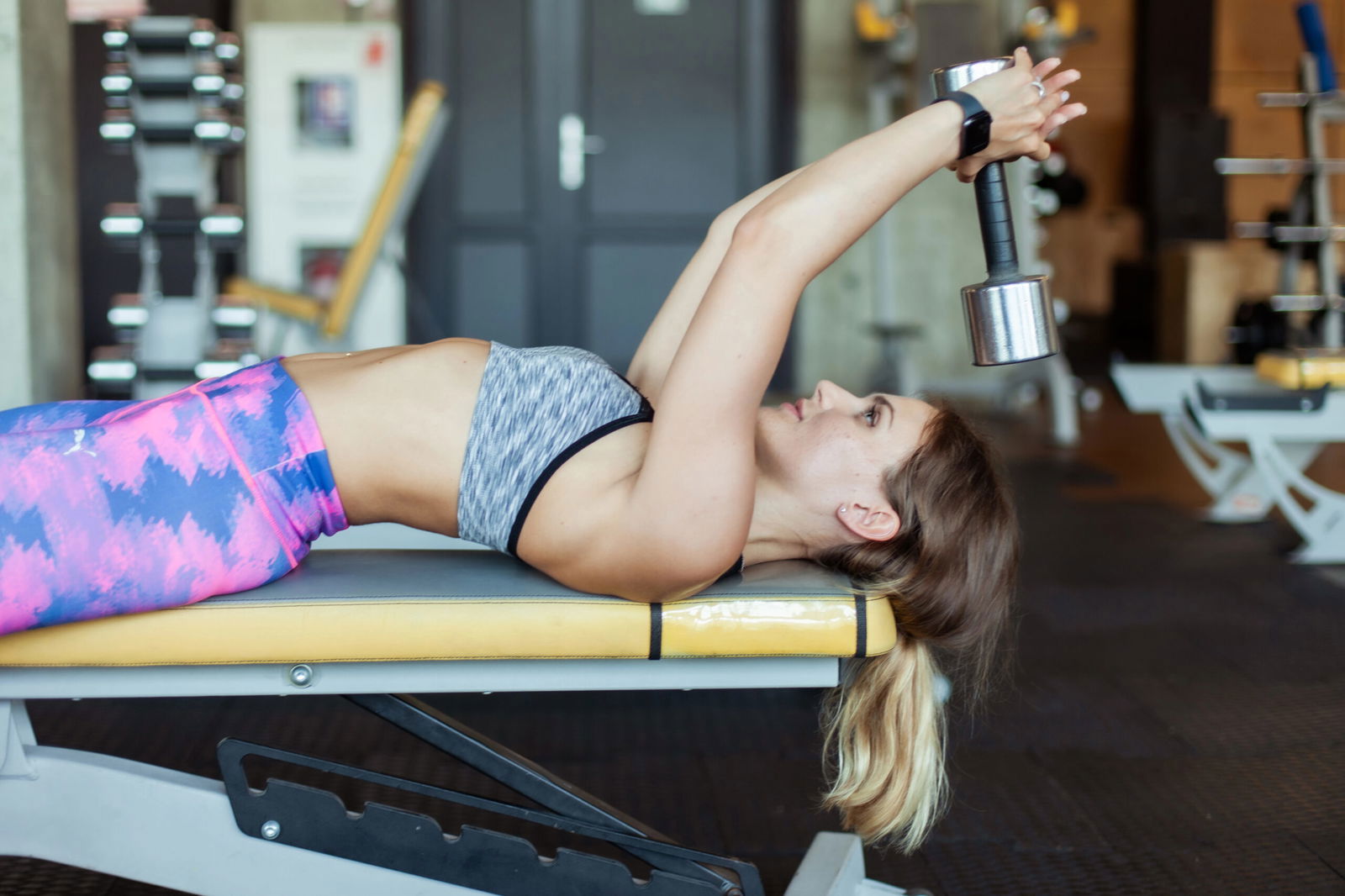
A dumbbell pullover can make or break your chest and back, depending on how you do it.
Dumbbell pullovers are one of those exercises that look easy until you catch yourself negotiating with gravity after three reps. But that is where its true power lies.
You perform it by lying on a bench on your back and lowering one dumbbell behind your head. It targets your shoulders, chest, core, and lats (and self-confidence) all at once.
It acts as a mobility and strength builder. And mastering it isn't just about knowing how to lift heavy weights; you need to learn to be in control and manipulate the motion.
Here is everything you need to know about mastering the Dumbbell Pullover
This guide will help you master the dumbbell pullover by teaching you how to do it correctly, figuring out the common mistakes, and thus, unlocking your full-body potential.
How to perform a dumbbell pullover:
- Choose a lightweight dumbbell and lie on a bench with your feet on the floor.
- Hold the dumbbell vertically with both hands in a way that your palms are pressed together.
- Get into the starting position by extending your arms over your chest.
- Slowly lower the dumbbell in an arc behind your head and keep a bend in your shoulders. Remember to inhale deeply and feel your chest expand.
- You will start to feel a stretch in your chest and lats. Keep lowering the weight until your upper arms are parallel to the floor and your biceps are near your ears.
- Hold the position for a few seconds, then bring the dumbbell back to the starting position. Squeeze your chest and lat muscles and exhale.
Remember to keep your core tight as you have to protect your lower back while performing the dumbbell pullover. Controlling the motion can be hard at first, but avoid jerking the dumbbell.
When you lift the dumbbell, squeeze your chest and activate your lats. Also, to avoid stressing your joints, bend your elbows instead of locking them.
Benefits of a dumbbell pullover:
- The stretching motion during the lowering phase activates muscle growth.
- It assists in strength training. It improves overall upper body strength by working pulling (pecs and triceps) and pushing (lats) muscles together.
- It helps improve shoulder mobility by making the shoulder go through a variety of movements. The stretch felt on the pecs and latissimus dorsi releases shoulder tightness caused by continuous sitting.
- It is a great way to improve core strength. The core muscle can perform an isometric contraction to help people resist arching their lower backs, which is crucial for spine stability.
- It acts as a posture corrector by strengthening the upper back and chest muscles and improving shoulder mobility. Pro tip: Dumbbell pullover, coupled with back pain exercises, can be an ultimate back-strengthening remedy.
Mistakes to avoid while performing a dumbbell pullover:
If a dumbbell pullover feels hard or ineffective, there is a good chance you are not doing it correctly. Here are some common mistakes that people make, which you should avoid.
- If you have a weak core and poor mobility, chances are you will arch your lower back. Avoid it because it will cause spine injury.
- No need to act like the champion weight lifter, Pyrros Dimas, and lift excessive weights. You will end up injuring your back or shoulder.
- Bend your elbows just right; otherwise, you will stress your elbows and triceps.
- Ensure a strong grip on the dumbbell, because you can imagine what can happen if you drop it.
- When you are new to this exercise, fatigue and poor control can cause jerky movements. Avoid them to reduce muscle tension and injury.
- Do not pin your shoulders down it can result in restricting the natural movement of the shoulder blades (scapula). It can restrict the space in the shoulder joint and cause impingement.
- Do not push your limits; extend as much as is comfortable. Otherwise, you risk getting your bursa or tendons pinched in the shoulder joints.
If you aren't comfortable with the dumbbell pullover, you can try different variants of this exercise, like the Decline Bench Press (Dumbbell), Incline Bench Press (Barbell), or the Inverted Rows.
Did we miss out on any other point? Share with us your own dumbbell routine in the comments below!
Written by

Ruwa Javed
Edited by

Joyita Das