
pressahotkey via freepik
pressahotkey via freepik
Jan 16, 2026, 1:00 AM CUT
Here’s How to Stretch Your Middle Back: Complete Guide, Benefits, and More
Based on a study in the National Library of Medicine
A middle back stretch, supported by research on its benefits, can reduce stiffness and muscle strain. And the best part is that it requires no equipment and can be done almost anywhere.
Loosening your back, obliques, and latismus dorsi muscles helps improve posture, comfort, and mobility. The key advantage of this stretch is that it enhances the range of motion, especially in the middle and lower back, reducing muscle stiffness and risk of injury.
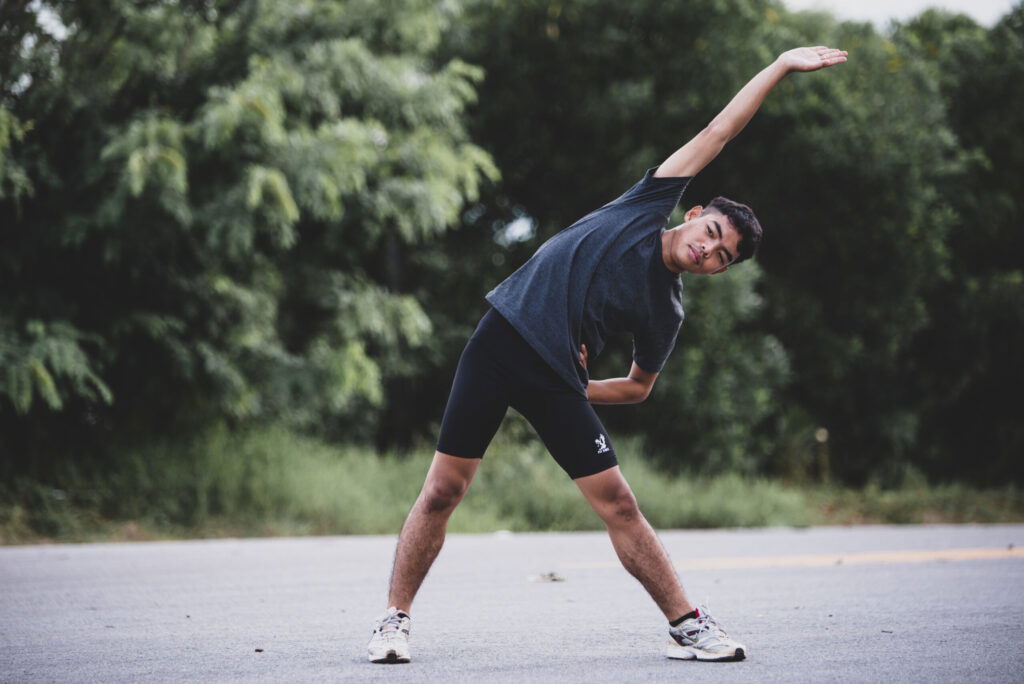
So to perform this move, you need to start by standing straight in a shoulder-width stance and place your hands on your torso. Start rotating the torso towards the left till they feel a stretch in the middle of their back, obliques, and lats. Stay in there for 2 seconds, then return to the initial position.
Now, perform the same movement on the other side, and continue alternating sides. However, make sure to avoid any jerking and momentum during the stretch.
The key is having control and not pressing on if you're experiencing any pain in your obliques or back. Doing 2-3 rounds of 10-20 seconds on each side should be sufficient.
jcomp via freepik
jcomp via freepik
The upper back, core, and hips play a vital role in maintaining the straight spine. So, stretching these muscles also reduces overall spinal strain, and that's not the only benefit.
Research by Jesús Montero-Marín, Sonia Asun, and others in 2013 showed that stretching helps in “reducing levels of anxiety, bodily pain and exhaustion, raising levels of vitality, mental health, general health and flexibility.”
Once you master this, you can also perform its variations and alternatives to enhance your stretching game.
Variations and Some Alternatives
This basic stretch is effective on its own, but variations allow deeper muscle loosening and additional benefits. You can use ‘Pretsel stretch,’ which helps improve flexibility in the lower back, obliques, and glutes.
A lying crossover is another stretch you can include. This allows greater stretch, specifically in the lower back and gluteal muscles.
Another variation of the stretch is the single-arm overhead lats, which targets the lats and obliques because it requires extending the arms overhead while leaning to the right and left.
So, will you incorporate this move into your daily stretching routine? Tell us in the comments.
Written by

Supradeep Dutta
Edited by

Sagnik Bagchi