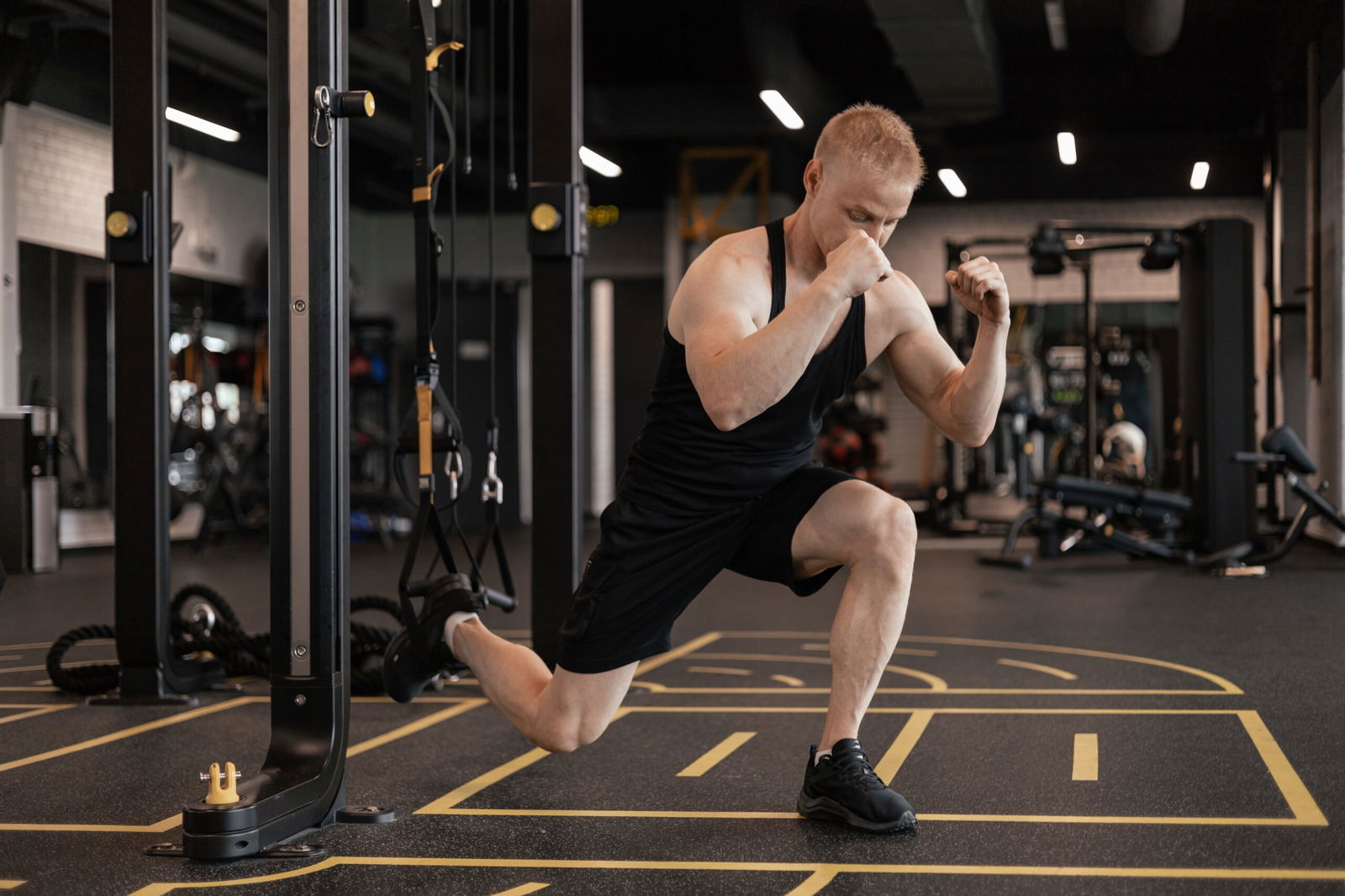
Strong sportsman doing bulgarian lunges in a gym with TRX xkwx {background lungs legs active weight squats sportsman club african american fit strength free space bulgarian split male handsome strong guy indoors empty space copy space millennial attractive equipment power athlete gym energy lifestyle training exercise fitness bodybuilding health young modern sport body muscle adult wellness bodybuilder muscular man determination workout motivation working out exercising caucasian TRX}
Strong sportsman doing bulgarian lunges in a gym with TRX xkwx {background lungs legs active weight squats sportsman club african american fit strength free space bulgarian split male handsome strong guy indoors empty space copy space millennial attractive equipment power athlete gym energy lifestyle training exercise fitness bodybuilding health young modern sport body muscle adult wellness bodybuilder muscular man determination workout motivation working out exercising caucasian TRX}
May 14, 2026, 6:15 PM CUT
How Does Overtraining Impact Bodybuilders in Real Life?
Supported by experts like Niloofar Nobakht, Max Healthcare, and the Cleveland Clinic.
Many gym-goers think that overtraining is what they need to build muscle quickly. However, the truth is far from this.
According to Generation Iron, overtraining is a condition in which the body experiences more physical stress than it can recover from over time. In bodybuilding, this condition occurs when someone trains with intensity and volume and exceeds their ability to recover.

@serhii_bobyk via freepik
@serhii_bobyk via freepik
So, when it is known that overtraining is real, let's understand how it affects bodybuilders in real life.
Impact of overtraining on bodybuilders
Some of the impacts are:
Declining strength
One of the most important impacts that one can experience is a decline in their strength and gym performance.
Rhabdomyolysis
It is a life-threatening syndrome that occurs from overtraining. In this condition, damaged muscles release an excessive amount of blood into the body, and the kidneys often fail to manage it.
According to Niloofar Nobakht, MD, “Exertional rhabdomyolysis can occur after strenuous exercise and during high-intensity workouts when the muscles are overused.”
Poor sleep quality
Cleveland Clinic highlighted that overtraining can lead to poor sleep quality. Some common signs include:
- Walking up frequently
- Difficulty in falling asleep
Increased joint pain
According to Generation Iron, excessive training causes pain in:
- Ligaments
- Tendons
- Joints
Muscle breakdown instead of gain
According to Max Healthcare, overtraining leads to:
- Muscle fatigue
- Soreness
- Breakdown
Muscle needs enough time to recover, and if it does not get that, it starts to decline.
After understanding the implications of overtraining, many people may wonder how to prevent it.
Ways to prevent overtraining
Generation Iron has provided the following approaches to manage overtraining:
- An adequate amount of sleep, about 7 to 9 hours
- Sleep can improve over time with a consistent schedule
- Managing the volume of the workout
- Deload the week and include plans such as lower weight, reduced intensity, and fewer sets
- Proper diet for recovery
Additionally, supplements such as essential amino acids, arginine, and electrolytes for hydration are important.
So, overtraining is a real issue, but it can be managed through proper diet, strategic training, and proper guidance.
Follow Bodybuilding Bros for more.
Written by

Supradeep Dutta
Edited by

Ashvinkumar Patil