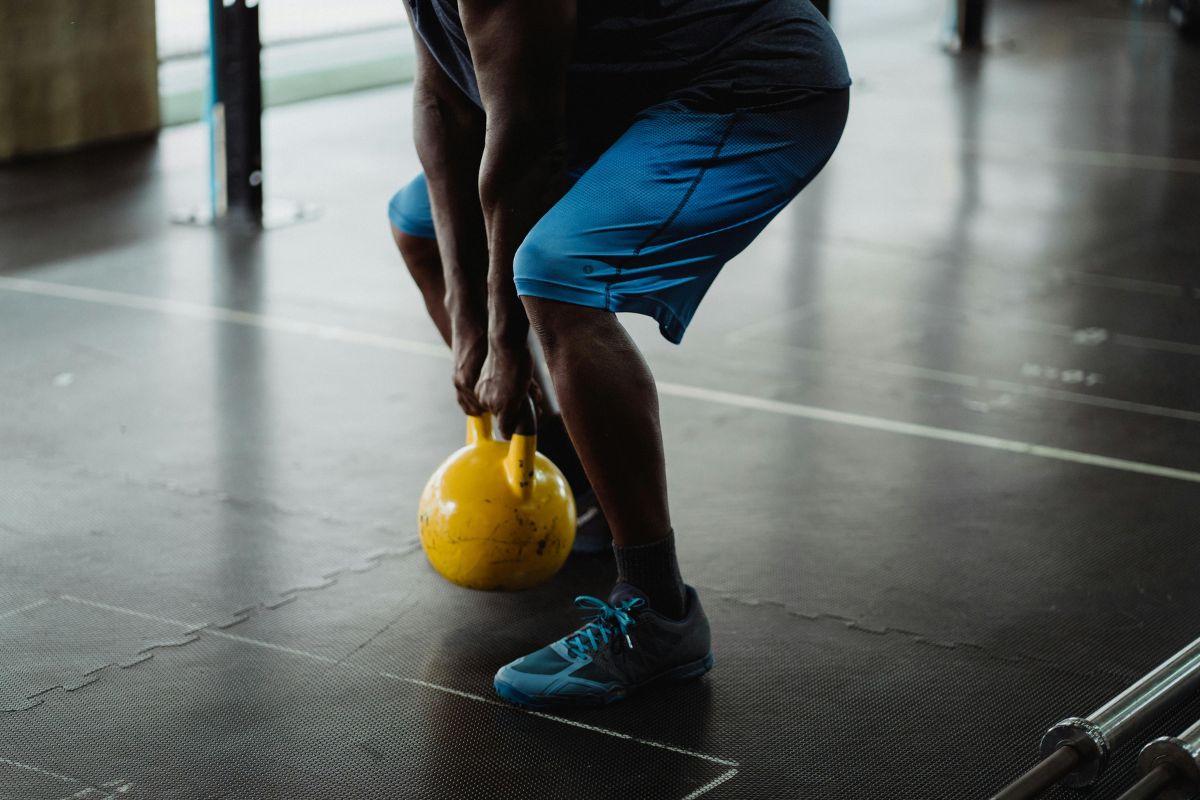
Photo by Ketut Subiyanto: https://www.pexels.com/photo/person-using-yellow-kettlebell-4720232/
Photo by Ketut Subiyanto: https://www.pexels.com/photo/person-using-yellow-kettlebell-4720232/
Jan 20, 2026, 10:00 AM CUT
How To Maximize on Kettlebell Deadlifts: Variations, Benefits, and Tips
While the conventional deadlift is one of the most important compound exercises out there, the kettlebell deadlift is not far behind. In fact, it offers a unique advantage.
“But the kettlebell deadlift places a single centralized load before your body, and that’s much more similar to picking up a box, or even an oddly shaped object like a boulder outside,” said Ebenezer Samuel, C.S.C.S., the Fitness Director of Men's Health magazine and a certified strength and conditioning specialist.
So, how can we maximize it to its full potential?
Primary Benefits of Kettlebell Deadlifts
Functional Strength:
The Kettlebell movement recruits the major muscle groups across the posterior chain, including the glutes, hamstrings, erector spinae, lats, and the core. In comparison with conventional deadlifts, these come with more safety and less strain on the spine, just allowing for better positioning.
Core and Spinal Protection:
While you do this exercise, your abs, obliques, and the lower back muscles work in a synchronized manner to stabilise the spine during the lift.
Grip and Accessory Strength:
By default, kettlebell workouts challenge the grip strength more than any traditional lifts, which translates to better performance
Accessibility:
Have limited space? No worries, because the kettlebell deadlifts take little to no space, which makes it suitable even for home workouts.
Key Technique Tips for Better Performance
- Instead of bending at the waist level, it would be better to initiate the movement by sending your hips back while maintaining a neutral spine.
- Bring the elbows slightly forward and then tighten the lats to help keep the spine more stable.
- At the top of each rep, forcefully extend through the hips and glutes before lowering the kettlebell.
Standing too far from the kettlebell is quite a common mistake while doing the deadlifts. This movement doesn’t engage the lats and puts more stress on the lower back, which in turn makes the movement less effective.
Variations
There are four variations of the kettlebell workout: Kettlebell Sumo Deadlift, Kettlebell Suitcase Deadlift, Kickstand Deadlift, and Single-Leg Romanian Deadlift.
In the sumo deadlift, one is positioned with legs spread apart and the kettlebell resting between your legs as one hinges the body. In the suitcase deadlift, one lifts the kettlebell on one side of the body as one keeps the body erect. The sumo deadlift enhances inner thigh and hip recruitment, while the suitcase deadlift challenges balance.
In the kickstand deadlift, one would have one leg slightly behind them as they do most of the lifting with their front leg. In the single-leg Romanian deadlift, one hinges on one leg as they extend the other leg back for support.
While the kickstand deadlift is one where balance is not a primary concern, one-legged strength is, the single-leg Romanian deadlift balances hip hinge strength and focuses on posterior chain strength.
Now that you have all the information you might need, which one would you start with? And if you have an established routine that works for you, share it in the comments.
Written by

Suryakant Das
Edited by

Joyita Das