Imago
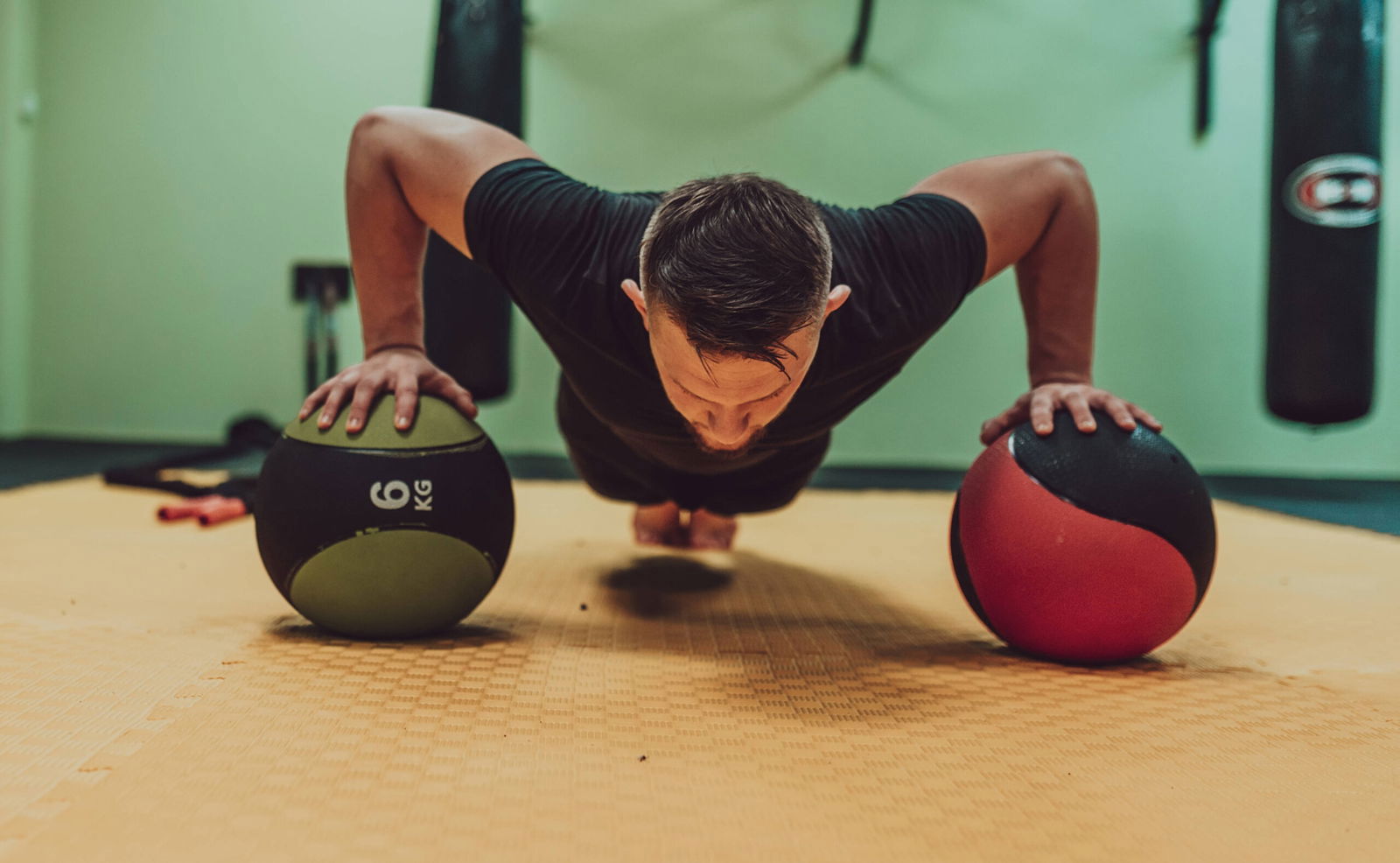
A young fit man doing push up exercise on medical ball at gym. A muscular man doing arm exercise at gym. High quality photo, model released, , 63539856.jpg RECORD DATE NOT STATED
Dec 28, 2025, 3:00 PM CUT
How to Use a Medicine Ball in Home Workouts? Benefits and Guidelines
A study by Sports Intelligence Research Sportive(SIRC) found that “Physical education teachers are now rediscovering the many benefits that can be achieved by incorporating medicine balls in their classes.” The Medicine Balls have always been underutilized in workouts, but the notion appears to be changing nowadays
Confused about how to utilize the heavy medicine balls in your workout properly? Well, sit tight as we are about to reveal everything.
Benefits of Medicine Ball Training at Home
Medicine balls are dense, weighted balls, typically made of rubber or leather, ranging from 2–15 kg (4–30 lbs) for home training.
A proper utilization of a medicine ball is to train every core muscle of your physique. Thanks to the medicine ball's versatility, it can be used for both isolation movements and compound exercises.
The best part about them is how you can use them as an accessory to train everything from your core, shoulders, glutes, hips, back, and arms through dynamic, multi-planar resistance.
Imago
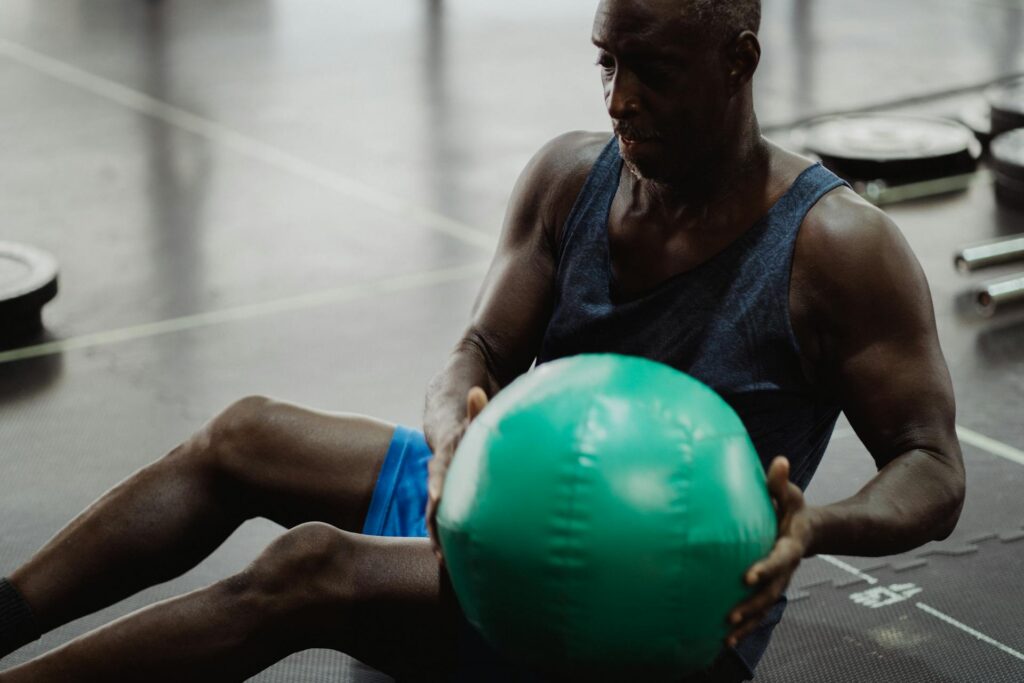
Ketut Subiyanto/Pexels
A proper use of a medicine ball can significantly help in cardiovascular conditioning, which is beneficial for athletes like sprinters and fighters.
So, how do you use it properly for home workouts?
Medicine Ball Workout
The very first step in the workout is to choose the right weight.
Beginners: 2–4 kg for core and mobility, 5–6 kg for strength basics
Intermediate: 7–10 kg for slams and rotational power
Advanced: 10–15 kg for slow, controlled strength work.
After this, begin with stretching and a warm-up to activate the muscles and reduce tension before the workout. And this is full body worout with the ball looks like:
- Overhead Ball Slam = core + lats + glutes
- Russian Twists = obliques and trunk control
- Wall Chest Pass = chest power and endurance
- Ball Push-Up Hold + Shoulder Taps = stability and control
- Lunge With Torso Rotation = balance + core + hips
Safety
A medicine ball can be heavy, and losing control of it during a workout may increase injury risk. Staying cautious and maintaining proper control is essential to prevent injuries
- Maintain a neutral spine during slams
- Exhale during exertion
- Make sure you have a proper balance during the slams
- Do not use heavy weighted balls at the beginning
- Make sure that you are working out on a slippery floor.
With medicine ball workouts becoming the norm, it is easier to train with them than to invest in expensive workout equipment.
Written by

Suryakant Das
Edited by

Sagnik Bagchi