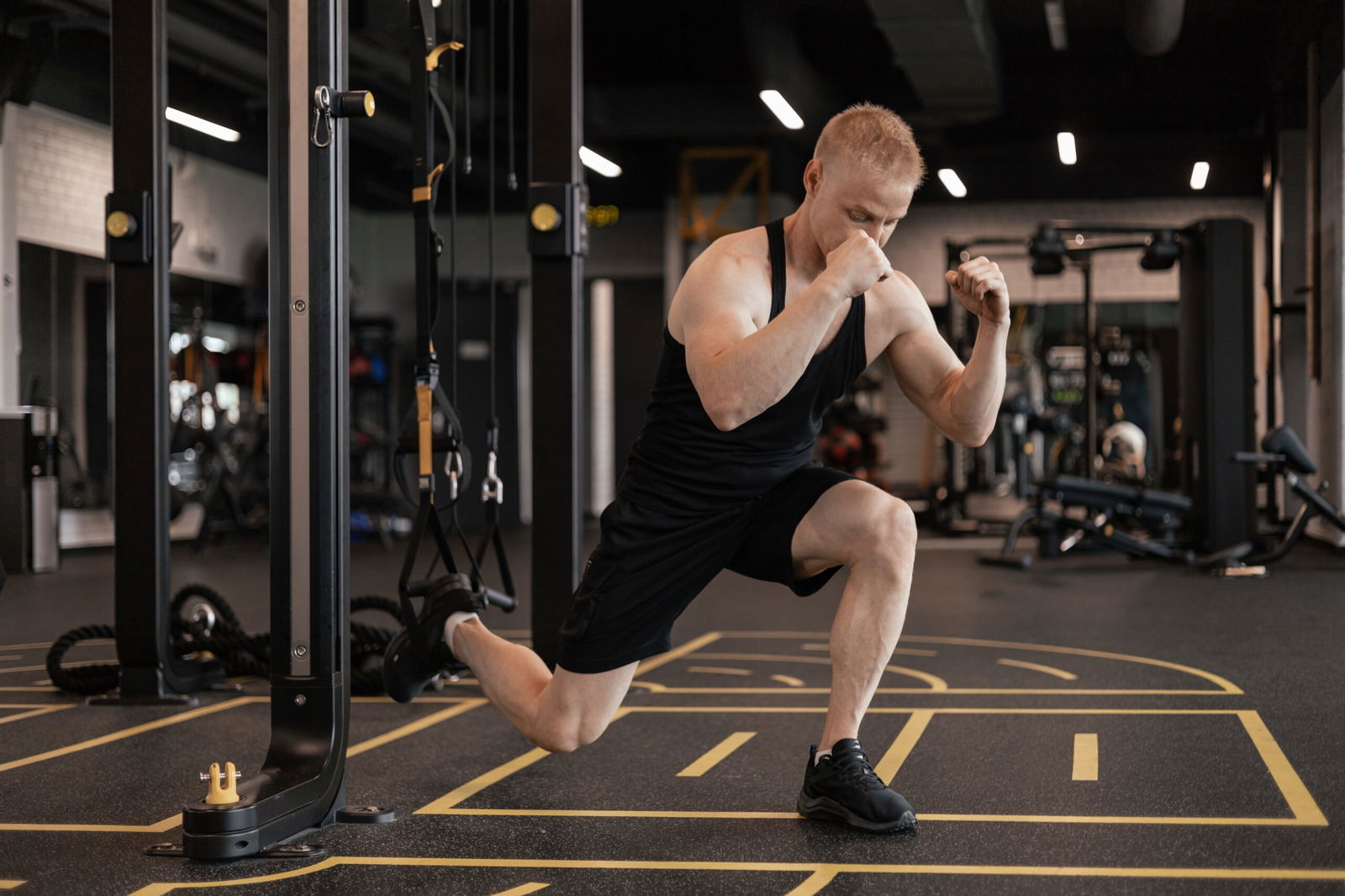
Strong sportsman doing bulgarian lunges in a gym with TRX xkwx {background lungs legs active weight squats sportsman club african american fit strength free space bulgarian split male handsome strong guy indoors empty space copy space millennial attractive equipment power athlete gym energy lifestyle training exercise fitness bodybuilding health young modern sport body muscle adult wellness bodybuilder muscular man determination workout motivation working out exercising caucasian TRX}
Strong sportsman doing bulgarian lunges in a gym with TRX xkwx {background lungs legs active weight squats sportsman club african american fit strength free space bulgarian split male handsome strong guy indoors empty space copy space millennial attractive equipment power athlete gym energy lifestyle training exercise fitness bodybuilding health young modern sport body muscle adult wellness bodybuilder muscular man determination workout motivation working out exercising caucasian TRX}
Jan 24, 2026, 5:00 AM CUT
Are Leg Workouts Safe With Back Injuries? Tips and Safety Guidelines
Is starting training again after a back injury a risky option? Not anymore. An upset back can’t stop you from becoming fit and strong.
You can squat hard, bench hard, and even lift hard if you follow a smart training program.
As mentioned by Steele J, Bruce-Low S, and Smith D in Resistance training for chronic low back pain: a systematic review, Sports Medicine 2013, a properly programmed resistance training reduces pain and improves function in people with chronic low back pain, without increasing injury risk.
Thus, with a carefully curated training program coupled with your understanding that pushing yourself is not an option anymore, you can still build muscles and become leaner and stronger.
Here is the secret recipe.
Workout routine to follow if you have an injured back
Before diving into the workout session, you need to set three things straight: set your tolerance level, warm up rigorously, and alter your movements according to your needs.
Single-leg workout
Bulgarian split squat:
With weights in both hands, keep one foot elevated on a bench and squat, and watch your quads, glutes, and hamstrings evolve. Your core and hips are engaged without any spinal stress. This exercise prevents axial loading, and it's advised to push it to failure for maximum effect.
According to McGill (2007), Journal of Strength and Conditioning Research, a study demonstrated that exercises minimizing axial compression significantly lower spinal shear and compressive forces.
Pistol squats:
Squat and stand back up using only one leg. It targets the quads, glutes, and muscles around the hip and ankle. Since there is no need to go all the way down, it makes it back-friendly.
Split squat:
Take any desirable weight and start doing lunges in a stationary position. The more you stand upright, the more your quad muscles and glutes will be engaged. The less you lean forward, the less it puts strain on the lower back and reduces axial loading.
Single-leg leg press:
As the name suggests, it is a leg press, but with a single leg. The machine will support your torso. Remember to put your leg in the middle of the plate and turn out a little; it will reduce pressure on the SI joint and back.
Machine-based workouts
Belt Squat:
Wrap your hips with a belt that has a weight attached to it and then squat. Your quads and glutes will thrive without stressing your spine.
Seated hamstring curl:
When your back is sore, it is highly recommended to do a seated hamstring curl, and the back is not stressed as the workout reaches failure.
Leg extension:
All you have to do is extend your knees as you are sitting. It isolates the quads, but there is no need to involve the spine at all.
Hip abduction machine:
Hip abduction helps strengthen side glutes that are used to maintain the pelvis and the lower back.
Hip adduction machine:
It is the opposite of hip abduction. In the former, to extend your legs outward, you contract your legs inward. The exercise puts stress on the inner thighs and strengthens the pelvis and hips.
Machine calf raises:
By pressing the machine with your toes, you are using a single leg at a time, you have more control and less overall load on the spine.
Pre-exhaust
Example superset:
Begin with a leg extension and perform it till failure, and then go for squats. With your legs pre-fatigued, there won’t be a need to hold heavy weights during squats, thus no stress on the back.
Focus on recovery:
Instead of performing squats right after leg extensions, you can wait to do them at the end of your workout. Since you will already be tired, you can lift lighter weights while still maintaining intensity.
Controlled tempo and tension:
You can choose to work out in a slow and controlled manner, which will put sufficient tension on the workout, making light weights feel heavy. In this way, there is less stress on the ba,ck but still muscles are fully involved.
Why training with an injured back is a great option
- Injuries can break your wellness routine,e leading to poor dietary and sleeping habits, and in some severe cases, es addiction to alcohol. So, continuing to train even if you are injured helps you not break your rhythm and spiral into bad habits.
- Training aids recovery. As long as your pace, intensity, and frequency are monitored, your workout can aid your recovery process.
- Continuing to work out after an injury has been known to help people psychologically. Working out through pain and injury helps elevate your mood and break out of the mindset of thinking you can’t do anything anymore.
But before jumping back into action, you have to check if your body is even ready for it. You need to give your body some time to recover from the injury and only then resume training.
If at any point during your workout you start feeling discomfort or enough pain to drop whatever you are doing, it is a sign for you to take a break and let your body recover first.
Written by

Ruwa Javed