Via garage-gyms.com
Via garage-gyms.com
Dec 6, 2025, 4:00 AM CUT
How to Master the Block Pull Workout at the Gym: Benefits and Tips
Deadlifts shape strength, but they also demand precision. Many lifters chase heavier numbers only to stall at the lockout or strain their lower back. The block pull steps in as a simple tool that changes how you train the top half of the deadlift. By raising the bar just a few inches off the floor, you shift the focus, refine your technique, and build pulling power with less stress. This makes block pulls one of the most reliable ways to improve deadlift performance.
What Is a Block Pull?
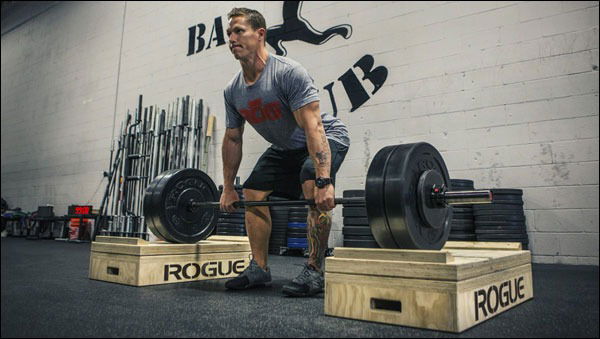
A block pull is a deadlift variation where the bar sits on blocks or plates, reducing the range of motion so you start the pull just below the knee. This lets you overload the top portion of the lift, build strength, and protect the lower back. The exercise works the same muscle groups as a deadlift: erector spinae, lower back, traps, lats, rhomboids, glutes, hamstrings, quads, adductors, calves, forearms, and core.
How to Perform a Block Pull
- Set blocks so the bar rests a few inches below your kneecap.
- Stand with feet at shoulder width and knees slightly bent.
- Hinge at the hips, lean forward, and grip the bar with an overhand or mixed grip.
- Brace your core, tighten your glutes, pull your shoulders back, and lift while dropping your hips.
- Push through your feet, keep your back straight, and stand tall at lockout.
- Lower the bar under control back to the blocks.
Key Benefits
Stronger Posterior Chain: Block pulls train the back and lower-body muscles used in heavy deadlifts, improving force and coordination.
More Hamstring and Glute Activation: The shortened movement mimics a Romanian deadlift and increases tension on the posterior chain.
Lower Back Protection: Shortening the lift reduces rounding at the bottom, useful for lifters with mobility limits or long limbs.
Better Lockout Strength: Many lifters fail at the top of the deadlift. Block pulls target this exact sticking point.
Useful Warm-Up Tool: They prepare the body for heavy deadlifts without full-range stress.
Which is your favourite back exercise? Let us know in the comments section.
Written by

Amanjeet Singh
Edited by

Joyita Das